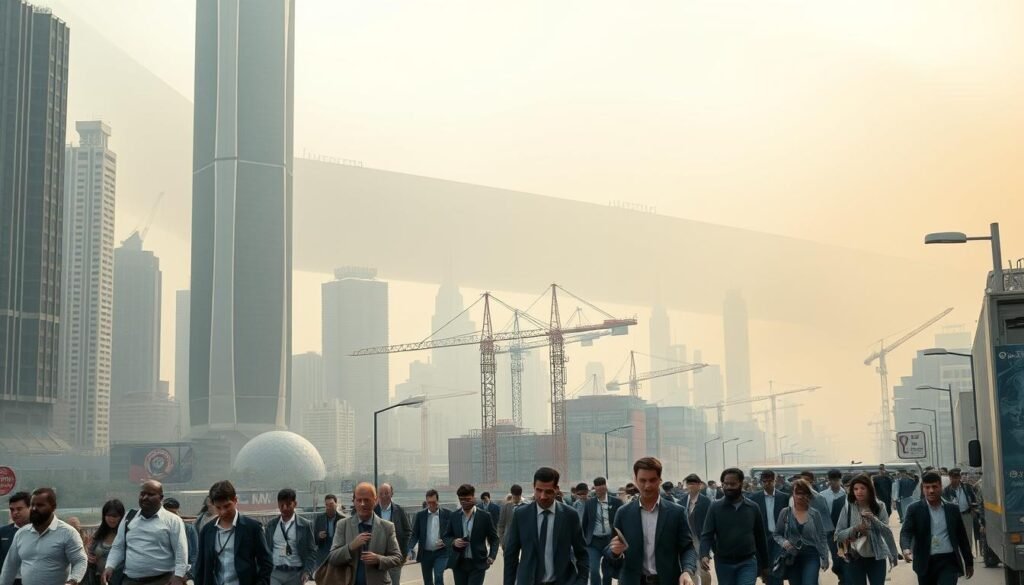
The U.S. government has brought back tariffs, sparking a big debate. This move is being watched closely by economists and policymakers. They want to see how it affects economic growth.
The global economy is changing fast. It’s important to understand how the 2025 U.S. tariffs will affect trade and the economy. Recent data shows these tariffs could have big impacts on trade policies and the economy overall.
Key Takeaways
- The reintroduction of tariffs aims to protect domestic industries.
- Experts predict a potential slowdown in economic growth due to increased tariffs.
- The impact on global trade policies is being closely watched.
- Businesses are advised to prepare for potential changes in the market.
- The long-term effects of the tariffs on the U.S. economy are still uncertain.
The New Wave of Trade Protectionism
In November 2025, a big change in trade policies was announced. This change has made global markets more complex. Tariffs now affect how countries trade with each other.
November 2025 Tariff Announcements
The November 2025 tariff announcements added a new layer of complexity to global trade. Technology, automotive, and agriculture sectors were hit hard. These tariffs could change trade balances and economic growth a lot.
“Tariffs are a double-edged sword,” said an expert in international trade. “They protect domestic industries but also raise costs for consumers and businesses.” Many economists are watching this closely.
Immediate Market and Currency Reactions
When the tariff announcements came out, financial markets saw a lot of volatility. Currencies went up and down as investors changed their plans. The impact on currency exchange rates was big, with some currencies falling sharply.
The market’s reaction shows the uncertainty and risk of this new trade protectionism. As trade policies keep changing, businesses and investors need to stay quick to adapt.
Historical Context: Lessons from Past Trade Wars
Trade wars in the past offer key insights into today’s protectionist policies. The global economy has seen ups and downs due to trade disputes. It’s vital to learn from these past conflicts.
2018-2020 Tariff Impacts on GDP Growth
Tariffs from 2018-2020 affected GDP growth worldwide. Studies found that higher tariffs cut international trade, hurting economic growth. For example, the World Trade Organization noted a drop in global trade growth during this time.
Economic Recovery and Trade Policy Evolution
After the trade wars, the global economy started to heal. Trade policies changed to help stabilize and boost cooperation. Trade volumes slowly rose, and trade policies became more collaborative.
Learning from past trade wars shows the need for diplomatic efforts in a stable global economy. As trade policies keep changing, knowing these lessons is key to predicting future economic trends.
Understanding the 2025 U.S. Tariffs and Economic Growth Projections
The 2025 U.S. tariffs are a big change in trade policy. They will affect many industries and the economy’s growth. It’s key to look at the products and industries that will be hit by these tariffs.
Key Products and Industries Targeted
The 2025 tariffs will hit big industries like tech, cars, and farming. Products like chips, steel, and some farm goods will see higher tariffs. For example, tariffs on chips could raise costs for tech companies, making them less competitive worldwide.
Here’s a list of the products and industries that will be affected:
| Industry | Products Affected | Tariff Rate |
|---|---|---|
| Technology | Semiconductors | 25% |
| Automotive | Passenger Vehicles | 10% |
| Agriculture | Soybeans, Corn | 15% |
Implementation Timeline and Rate Structure
The tariffs will start in two phases. The first phase in March 2025 will have a 15% tariff on some imports. The second phase in September 2025 will raise the tariff to 20% on more products.
The U.S. Trade Representative said, “The phased start is to help businesses adjust and avoid disruptions.”
Federal Reserve and Treasury Department Responses
The Federal Reserve and Treasury Department are watching the tariffs closely. The Federal Reserve wants to keep the economy stable. The Treasury Department is looking for ways to help affected industries.
“We are closely monitoring the situation and are prepared to take necessary actions to ensure the stability of the financial system,” said the Federal Reserve Chair in a recent press conference.
Together, these groups aim to lessen the tariffs’ negative effects on the economy.
Domestic Economic Impact Analysis
It’s important to understand how the 2025 tariffs affect the U.S. economy. These tariffs have caused a ripple effect in many sectors.
Manufacturing Sector Outlook
The manufacturing sector will see big changes with the tariffs. Industries that rely on imported raw materials will face higher costs. This could lead to higher prices for consumers.
But, domestic producers might gain from these policies. They could become more competitive against foreign imports.
The impact will differ by industry. For example, the automotive and steel sectors will have to adjust their supply chains and prices.
Consumer Price Index Projections
The tariffs will likely affect the Consumer Price Index (CPI). As costs for imported goods rise, these costs will be passed on to consumers. The CPI could increase by 0.5 to 1.5 percentage points.
Economic forecasts suggest this rise could impact monetary policy and consumer spending.
Labor Market Effects and Wage Pressures
The labor market will also be affected by the tariffs. Protectionist policies might save or create jobs in some industries. But, they could lead to job losses in others.
Wage pressures will arise as businesses adjust. In strong-demand industries, workers might see wage increases. But, in sectors hit by tariffs, wages could stay the same or drop.
Global Economic Ripple Effects
The 2025 U.S. tariffs have caused big waves in the global economy. This has led to a big rethink of how countries trade with each other. The changes are affecting not just the U.S. but also its trading partners all over the world.
Retaliatory Measures from Trading Partners
Many big trading partners have hit back with their own tariffs. These tariffs target important U.S. goods like food, made products, and tech. This could hurt U.S. industries a lot.
These moves could make trade tensions worse. This might lead to a big trade war. Such a war could mess up global supply chains and slow down economic growth.
Supply Chain Disruptions and Reorganization
The 2025 U.S. tariffs have already messed up global supply chains. Companies are now thinking about where to get their goods from. This might change how they make and ship things.
This change could cause short-term problems and long-term shifts in trade. Companies might try to spread out their supply chains. This could make them less dependent on one market.
Impact on Global Growth Forecasts
The 2025 U.S. tariffs, the counter-tariffs, and supply chain issues will likely hurt global economic growth. Groups that watch the world economy might have to lower their growth predictions.
How much this will affect global growth depends on a few things. These include how bad trade tensions get, how well supply chains can handle the changes, and how fast economies can adjust to the new trade rules.
Industry-Specific Consequences
New tariffs in 2025 are changing the U.S. industry landscape. Different sectors face unique challenges and opportunities.
Technology and Semiconductor Sector
The tech and semiconductor industry is struggling with component shortages. Tariffs on imports have raised prices, hitting manufacturers hard.
Critical Component Shortages and Pricing
Component shortages have driven up prices, raising production costs. Some manufacturers are looking for new suppliers or covering the extra costs.
Innovation and R&D Investment Changes
Technology companies are rethinking their R&D investments due to tariffs. They’re focusing on making components in the U.S. or finding new materials to avoid tariff costs.
Agricultural Exports and Farm Income
The 2025 tariffs are hitting the agricultural sector hard. Retaliatory measures have cut U.S. agricultural exports, lowering farm income for some.
Automotive Industry Adjustments
The automotive industry is adjusting to the new tariff rules. They’re looking at new supply chains and domestic production to avoid tariff costs.
Steel, Aluminum, and Raw Materials Markets
Tariffs on steel and aluminum have boosted U.S. production. But, they’ve also raised costs for construction and automotive industries.
Retail and Consumer Goods Price Impacts
Retail and consumer goods prices are going up due to tariffs on imports. This is changing how consumers spend, with some retailers covering the costs and others passing them on.
| Industry | Impact of Tariffs | Potential Outcomes |
|---|---|---|
| Technology and Semiconductor | Critical component shortages, increased pricing | Shift to domestic suppliers, increased R&D for alternative materials |
| Agricultural | Retaliatory measures affecting exports, decreased farm income | Exploration of new markets, diversification of exports |
| Automotive | Increased costs for imported components | Domestic production of components, supply chain reorganization |
| Steel and Aluminum | Increased domestic production, higher costs for reliant industries | Balancing domestic production with industry needs |
| Retail and Consumer Goods | Price increases for imported goods | Absorbing costs or passing them to consumers |
Trade Agreements and Negotiations in Flux
The 2025 U.S. tariffs have caused big changes in trade partnerships around the world. This has led to a review of current agreements and the start of new talks. These efforts aim to adapt to the shifting economic scene.
Status of Major Trade Partnerships
Tariffs have strained many key trade relationships. For example, the U.S.-China trade ties are under a lot of pressure. The U.S. has put tariffs on Chinese goods, causing tension.
Trade talks between the U.S. and the European Union are also affected. Both sides are working to lessen the tariff impact.
Key trade partnerships affected include:
- U.S.-China
- U.S.-EU
- U.S.-Canada
- U.S.-Mexico
WTO Challenges and International Trade Law
The World Trade Organization (WTO) is facing big challenges due to the 2025 U.S. tariffs. The WTO tries to solve disputes between the U.S. and its trading partners. But, its success is being questioned, making people wonder about the future of international trade law.
The ongoing trade tensions show the need for WTO reform. This is to keep it effective in handling trade disputes.
Expert Analysis and Economic Forecasts
Experts from finance, academia, and business leadership are sharing their views on the 2025 U.S. tariffs. Their insights help us understand the possible effects of these trade policy changes.
Wall Street and Financial Institution Projections
Financial experts on Wall Street see mixed effects on the economy. Goldman Sachs believes tariffs could boost domestic manufacturing short-term. But, they might also raise consumer prices and spark retaliation from trading partners.
Mark Zandi, Chief Economist at Moody’s Analytics, says the GDP growth impact depends on U.S. trade management and avoiding disruptions.
Academic Economist Perspectives
Academic economists offer detailed views on tariffs. Dr. Pinelopi Koujianou Goldberg, former World Bank Chief Economist, points out tariffs can protect domestic industries but may increase costs for consumers over time.
A Harvard economists study shows tariffs can greatly affect trade relations. This might lead to changes in global supply chains.
Business Leader Responses and Strategy Shifts
Business leaders are changing their plans due to the tariffs. Jamie Dimon, CEO of JPMorgan Chase, advises companies to diversify supply chains and invest in domestic production.

Meanwhile, automotive sector leaders are looking for new sources to lessen tariff impacts on their operations.
Conclusion: Navigating the Changing Economic Landscape
The 2025 U.S. tariffs have brought a new layer of trade protectionism. This change affects the global economy and U.S. growth. The sections before have shown how complex and changing our economic scene is.
The U.S. economic outlook is full of both challenges and chances. The tariffs will greatly affect manufacturing, prices, and jobs. The world economy will also feel the effects, like trade wars and supply chain problems.
Businesses and leaders need to understand the new trade rules and their effects. This article shows the importance of knowing the economic growth chances and risks with the new tariffs.
As the U.S. economy keeps changing, watching trade policies closely is key. The insights from this article can guide decisions and planning. This helps support lasting economic growth.